Tuesday, August 7, 2018

PLDT; regularization of workers; when allowed. - "In a decision promulgated on July 31, the CA 10th Division said that janitorial, maintenance, security workers and messengers are not necessary to the principal business of PLDT, and therefore, they may be contracted."

See - https://www.rappler.com/nation/208979-court-appeals-decision-pldt-workers-case


"x x x.

PLDT workers lose regularization case at Court of Appeals
The Court of Appeals remands to DOLE the case of installation, repair and maintenance workers, and voids the regularization of janitors, I.T, back office support, sales, and others

Lian Buan
@lianbuan
Published 9:35 PM, August 06, 2018
Updated 4:21 PM, August 07, 2018


MANILA, Philippines – Workers of telecommunications giant PLDT Incorporated who previously secured regularization orders from the Department of Labor and Employment (DOLE) lost at the level of the Court of Appeals (CA).

The CA voided DOLE’s regularization of the following workers of PLDT:
Janitorial services, messengerial and clerical services
Information technology (IT) firms and services
I.T support services, both hardware and software; and applications development
Back office support and office operations
Business process outsourcing or call centers
Sales
Medical, dental, engineering and other professional services
The CA remanded to DOLE for “further conduct of proceedings” the regularization of individuals performing installation, repair and maintenance services.

Workers' group Power held a protest in front of the Court of Appeals morning of Monday, August 6.

The workers that CA declared to be not entitled to regularization were originally part of the more than 7,000 workers that DOLE ordered PLDT to regularize.

It is unclear how many workers will be regularized, after the CA significantly cut down the workers entitled to it. (READ: #SavePLDTContractuals: Ex-PLDT workers share stories of being jobless)

In a statement, the DOLE said it is reviewing the CA decision “with with the end view of filing a motion for reconsideration.”

CA decision
In a decision promulgated on July 31, the CA 10th Division said that janitorial, maintenance, security workers and messengers are not necessary to the principal business of PLDT, and therefore, they may be contracted.

“Consequently, the janitors, security guards and messengers belong to that class or group of employees of the contractors that should not be regularized by PLDT,” the CA said.

In the case of medical and dental workers, the CA said that they are not “directly related to PLDT’s principal business.”
“Hence, PLDT is not required to hire doctors, nurses and dentists as its regular employees and these are services or functions that may be validly contracted out,” the CA said.

As for other professional services, the CA said “the workers were found to be independent contractors because of their unique skills and talents and the lack of control over the means and methods in the performance of their work.
“As such, this group of employees is expected to provide professional service based on their independent discretion as such professionals,” the CA said.

The 47-page decision was penned by Associate Justice Edwin Sorongon, with concurrences from Associate Justices Sesinando Villon and Maria Filomena Singh. – Rappler.com

x x x."

Monday, August 6, 2018

Duterte's federalism downgrades the present Supreme Court. - "The Federal Supreme Court is but a shadow of the present Supreme Court."

See - https://www.rappler.com/thought-leaders/208724-proposed-constitution-downgrades-supreme-court-philippines

"x x x.

Draft charter downgrades Supreme Court
Creating mini supreme courts has never been advanced as solutions because it is contrary to the idea of One Supreme Court

By Retired SC Associate Justice Vicente V. Mendoza

Published 7:47 PM, August 04, 2018
Updated 7:47 PM, August 04, 2018


Arguably the most renowned court in the world today is the Supreme Court of the United States. Its importance lies in the fact that it stands at the top in a hierarchy of state and federal courts, while its prestige owes to the fact that it has the power to determine the constitutional validity of the acts of the other departments of the government, legislative and executive.

The Constitution of the United States vests “the judicial power of the United States . . . in one Supreme Court and in such inferior courts as the Congress may from time to time ordain and establish.” The Constitution does not speak of “a Supreme Court,” but of “one Supreme Court,” and “inferior courts” to emphasize the intention to make it the highest and the most important court.


The U.S. Supreme Court owes its prestige from the fact that it possesses the power of judicial review, by virtue of which it has the power to pass upon the validity of the acts of the other departments of the government.

Although not expressly granted by the U.S. Constitution, the Supreme Court, by declaring in its 1803 decision in Marbury v. Madison that it is “emphatically the province and the duty” of courts to say what the law is, established their power to declare acts of the other branches contrary to the Constitution to be void.

This declaration had far reaching significance. Although for decades since its organization the U. S. Supreme Court was only “occasionally involved” in important political events in the early days of the American Republic, it soon became a significant branch of the American government. Since then, hardly had a political question arisen which was not sooner or later decided as a judicial question, as the French writer Alexis de Tocqueville observed in his travel to America.

Repudiation of one Supreme Court

We have patterned our Supreme Court after that of the United States.

Although it cannot be quite compared with its American counterpart, our Court has nevertheless captured some of the influence of that Court.

We have adopted the concept of One Supreme Court in our Constitutions from the 1935 document to the present one. On this ground the Supreme Court invalidated a law disqualifying from the consideration of treason cases members of the Court who had served during the war and temporarily replacing them with lower courts judges.

Now this idea of One Supreme Court is compromised in the proposed Constitution by the creation of 3 special courts in addition to a Federal Supreme Court: a Federal Constitutional Court, a Federal Administrative Court, and a Federal Electoral Court.

What was done is to strip the Supreme Court of its jurisdiction over some cases and transfer it to the special courts.

Under the proposed Constitution, “disputes or matter” involving constitutional questions and petitions for the writ of habeas corpus, writ of amparo, writ of habeas data, and writ of kalikasan are cognizable by the Federal Constitutional Court.

Appeals from the decisions of the Federal Commission on Human Rights, Federal Commission on Audit, Federal Ombudsman Commission, and Federal Competition Commission and other administrative and regulatory agencies are placed under the jurisdiction of a Federal Administrative Court. Electoral cases relating to the elections, returns, and qualifications of the President, Vice President, Members of Congress, as well as elective regional, provincial, city, municipal and barangay officials are placed under the jurisdiction of a Federal Electoral Court.

The Federal Supreme Court is but a shadow of the present Supreme Court.
Its jurisdiction is limited to appeals from the decisions and orders of lower courts not cognizable by the special courts, cases involving questions of jurisdiction and errors or questions of law, or the legality of any tax, impost, assessments, or toll or any penalty imposed in relation to it, cases involving conflicts between the Federal Government and the federated regions, those involving ambassadors, other public ministers and consuls, and petitions for certiorari, prohibition and mandamus, and quo warranto.

The purpose for the creation of additional courts is said to be to solve the backlog of cases in the present Court.

This is a problem that has been with the Supreme Court since 1946. Attempts to solve it have been by increasing the membership of the Court from 11 as provided in the 1935 Constitution to fifteen as provided in the 1973 and 1987 Constitutions and/or allowing the Court to sit in divisions.

Mini supreme courts

But creating mini supreme courts, however great the apprehension that a crowded docket may impair its essential function may have been, has never been advanced as solutions because it is contrary to the Idea of One Supreme Court.

Instead of additional supreme courts, attention should be paid to the method of work of the Supreme Court.

Only cases of general importance should be heard and decided by it. For this purpose appeals from the decisions of lower courts to the Supreme Court should be limited to petitions for review on certiorari of questions of law or questions of fact and law, leaving ordinary appeals on questions of fact to such appellate tribunal as may be created by law.

The difference between these modes of appellate review is that jurisdiction under certiorari is discretionary enabling the Court to select the cases it will review, while jurisdiction under ordinary appeal is obligatory. Although review by certiorari is provided in the 1997 Rules of Court, this mode of review can be made more effective not only by limiting review to questions of law and mixed questions of fact and law as at present done in practice, but also by screening them before they are placed in the regular docket of the Court.

Limited jurisdiction

Indeed, it is the power of judicial review which has enabled the Supreme Court to play an important role in our system of government.

It is a power which constitutes a significant intervention into the political process. As Bishop Hoadly said in his Sermon to the King of England on March 31, 1717: “Whoever hath an absolute authority to interpret any written or spoken laws, it is he who is truly the lawgiver, to all intents and purpose, and not the person who first spoke or wrote them.” In truth, only self-restraint stands between timidity and interventionism.

This power is most effective in the hands of the courts because it is exercised in the course of doing their regular business of deciding ordinary cases. It makes them powerful institution. It is this aspect of the American Court’s function that we have sought to endow our own Supreme Court with. It has somehow made them more than a regular court.

A special court of limited jurisdiction, like the Constitutional Court, to which this role is given, is not likely to wield the same influence in government that the present Supreme Court does, not only because its doctrines are not evolved in the ordinary course of business but also because of the type of cases that are likely come before it. Under Article IX, Section 11, the Federal Constitutional Court is given exclusive and original jurisdiction over “disputes involving the constitutionality of a law” as well as “disputes or matter involving questions of constitutionality.” This means that even ejectment cases, which involve questions of the constitutionality of a law or a constitutional question, can be brought only in the Federal Constitutional.

In addition, most likely the proposed Constitutional Court will be swamped with requests for advisory opinions on pending legislation and executive action.

The proposed Constitution provides that its opinions will not bar private parties from questioning the validity of laws declared valid by the Constitutional Court. Its authority will certainly suffer if it can repudiate its opinions and flip-flop in the decision of actual cases and controversies. The result will be the impoverishment of the judicial process.

On the other hand, the Federal Supreme Court may be relieved of its heavy caseload, but it will become an ordinary court and its status as a coequal and coordinate branch of government will be undermined. It will become a mere shadow of its original self.

Constitutional courts, such as the Verfassungsgerichtshop in Austria, were instituted in Europe because the ordinary courts did not have power “to say what the law is.” As their only function was to apply the law, it became necessary to establish special courts with power to interpret the constitution. Constitutional questions were referred to them and the cases in which the constitutional questions were raised had to await their resolution before the ordinary court could proceed. There is no reason to have a special Constitutional Court with exclusive to decide constitutional cases such as that proposed in the draft constitution.

'Demandable' rights

Three categories of rights are placed under the Bill of Rights in the proposed Constitution: Civil and political rights, social and economic rights, and environmental and economic rights. Its drafters, following some European writers, refer to the three categories as first, second, and third generation rights, respectively.

Article III, Section 1 provides that, The rights under this article are demandable against the State and non-state actors and their enforcement shall be consistent with international standards.

By declaring these rights to be “demandable against the State,” the draft Constitution in effect make them enforceable in the courts, because under Article IX, Section 1 it is “the duty of the courts of justice to settle actual controversies involving rights which are legally demandable and enforceable.”

Political questions are excluded from the constitutional grant of power to the courts because their resolution is committed to the other branches of the government or there are no “judicially manageable or discoverable standards” for resolving them.

There is no question that civil and political rights can be enforced in courts in proper cases. But the judicial enforcement of social and economic rights and environmental and ecological rights are problematical.

For example, can an action be filed in the Federal Constitutional Court to demand from the government “adequate food” based on the right of every person under Section 26(a) to “Adequate food”? Or, can a citizen bring an action against the government to demand that Manila Bay be cleaned up because under Section 28(a) he has a right to a “healthful environment and balanced ecology, clean air, clean water, clean soil, and clean surroundings”?

Indeed, social and economic eights are different from the civil and political rights because they require the positive furnishing of resources which courts obviously cannot do. In contrast, actions for the enforcement of civil and political rights, all cast in the negative as “don’ts, involve the redress of wrongs which courts are eminently suited to hear and decide.

After declaring that rights under Article III, Section 1 to be “demandable against the State and no-state actors,” that provision states that “their enforcement shall be consistent with international standards.” This is vague. Does the phrase “in accordance with international standards” mean standards for resolving issues otherwise political by non-judicial method, such as by simply referring complaints for violations of Environmental and Ecological Rights to appropriate agencies of the executive department for compliance perhaps by the of writ of kalikasan?

The International Covenant on Economic, Social, and Cultural Rights does not provide for the judicial enforcement of these rights, doubtless because those who wrote them were aware that these rights are not justiciable. Instead the Covenant relies for the enforcement of these rights on the good faith of states parties to the treaty.

The attempt to enforce these rights by court action can only cause frustration of expectations because of the declaration in Article III, Section 1 that the rights are “demandable against the State and [even] non-state actors.”

In the present Constitution some of the so-called second and third generation rights are found elsewhere than the Bill of Rights, obviously because the drafters of the 1987 Constitution were aware of the non-justiciable character of these rights. For example the right to a balanced and healthful ecology is found in the Article II (Declaration of Principles and State Policies), in which it is declared to be not a right of the people but a duty of the state to protect and promote.

I think provisions for so-called second and third generation rights can best be located in the Proposed Constitution elsewhere than in the Bill of Rights. – Rappler.com

The author is a retired justice of the Philippines’ Supreme Court and a faculty member of the UP College of Law

x x x."

Friday, August 3, 2018

The Equity Series: Truth and Reconciliation – "...a conversation on the relationship between U.S. racial history and contemporary social justice issues; the EJI's Lynching Project; and the roles that cultural institutions can play by acknowledging, discussing, and commemorating historical events. ..."

Justice in an Era of Mass Imprisonment | Institute of Politics. - "... issues relating to the US criminal justice system, such as criminal defense and fair trials, the death penalty, and the impact of race in court rulings...."

The Pivot to Asia with Kurt Campbell and Susan Shirk

Unleashing the use of force. - "Covert killings by states in the territory of other states have become a regular feature of international relations and there has been little scrutiny of their legality. This lecture will consider the challenges this practice poses for human rights and the rule of law. The norm prohibiting the use of force across borders was one of the most important achievements of the twentieth century. Today, however, the United States and its allies are systematically promoting international legal doctrines that radically expand the circumstances under which such armed attacks can be launched. At the same time, the crucial distinction between the rules applicable to military forces and those governing intelligence operations is deliberately being blurred, almost to the point of extinction. The result is that 'special forces' increasingly carry out killings covertly in the territory of other states, and the stage is being set for a significant expansion of such practices. Despite the destructive consequences of these developments for the norms against the use of force and against extrajudicial killings, many of the 'victim' states are surprisingly passive and other western governments seem largely unconcerned about the implications for the rule of law. There is an urgent need for the international community to call a halt to these developments."

What is Deliberative Democracy?

The Human Rights Treaty Body system - "This film presents the work of the UN treaty body system which monitors the implementation by States of the core international human rights treaties. Since the film's release, an additional human rights treaty has entered in force (the International Convention for the Protection of all Persons from Enforced Disappearance), bringing the total number of international human rights treaty bodies to ten."

Human Rights: Philosophy and History - Professor Sir Geoffrey Nice QC

Donald Trump's conflicts of interest span the globe

Race, Inequality, and the Legal Profession

Contracts - Center for Innovation in Legal Education

See - https://www.youtube.com/playlist?list=PLpbtRdN7xWUfKfRXfbgaPdQZBQSS1n2Vr

Contracts
Center for Innovation in Legal Education

Acollection of videos that explain the restatements in Contracts. Contracts is taught in the first semester of the first year of law school. Scripts by Professors Debora Threedy and Terry Kogan, design by Aaron Dewald, University of Utah S.J. Quinney College (c) 2012.


1

7:57


1. Contracts: Introduction to Contracts
Center for Innovation in Legal Education


2

8:21


2. Contracts: Bargain - Section 17
Center for Innovation in Legal Education


3

4:54


3. Contracts: Mutual Assent
Center for Innovation in Legal Education


4

9:17


4. Contracts: The Offer
Center for Innovation in Legal Education


5

6:55


5. Contracts: Acceptance
Center for Innovation in Legal Education


6

3:38


6. Contracts: The Counteroffer
Center for Innovation in Legal Education


7

10:07


7. Contracts: Unilateral Contracts
Center for Innovation in Legal Education


8

16:10


8. Contracts: Irrevocable Offers
Center for Innovation in Legal Education


9

13:44


9. Contracts: Consideration
Center for Innovation in Legal Education


10

9:10


10. Contracts: Battle of the Forms, Part 1
Center for Innovation in Legal Education


11

8:52


11. Contracts: Battle of the Forms, Part 2.
Center for Innovation in Legal Education


12

5:04


12. Contracts: Promissory Estoppel
Center for Innovation in Legal Education


13

9:33


13. Contracts: Unjust Enrichment
Center for Innovation in Legal Education


14

5:45


14. Contracts: Material Benefits Rule
Center for Innovation in Legal Education


15

5:20


15: Statute of Frauds, Part 1
Center for Innovation in Legal Education


16

4:45


16: Statute of Frauds, Part 2
Center for Innovation in Legal Education


17

10:10


17: Statute of Frauds, Exceptions
Center for Innovation in Legal Education


18

4:56


18. Contracts: Parol Evidence Rule Part 1: The General Rule
Center for Innovation in Legal Education


19

8:58


19. Contracts: Parol Evidence Rule Part 2: Ambiguity
Center for Innovation in Legal Education


20

8:18


20. Contracts: Parol Evidence Rule Part 3: Integration
Center for Innovation in Legal Education


21

3:28


21. Contracts: Parol Evidence Rule Part 4: Integration & UCC
Center for Innovation in Legal Education


22

10:47


22. Contracts: Duress
Center for Innovation in Legal Education


23

6:01


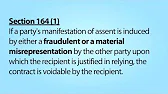
23. Contracts: Misrepresentation
Center for Innovation in Legal Education


24

6:19


25. Contracts: Public Policy
Center for Innovation in Legal Education


25

6:24


26. Contracts: Mutual Mistake
Center for Innovation in Legal Education


26

7:18


27. Contracts: Unilateral Mistake
Center for Innovation in Legal Education


27

8:38


Nondisclosure (Revised)
Center for Innovation in Legal Education


28

11:25


28. Contracts: Changed Circumstances
Center for Innovation in Legal Education


29

7:53


29. Contracts: Modification
Center for Innovation in Legal Education


30

12:06


30. Contracts:Express Conditions
Center for Innovation in Legal Education


31

10:59


31. Contracts: Material Breach and Constructive Conditions
Center for Innovation in Legal Education


32

8:59


32. Contracts: Expectation Damages
Center for Innovation in Legal Education


33

8:05


33. Contracts: Foreseeability
Center for Innovation in Legal Education


34

9:13


34. Contracts: Mitigation
Center for Innovation in Legal Education


35

10:20


35. Contracts: Reliance Damages
Center for Innovation in Legal Education


36

10:33


36. Contracts: Restitution
Center for Innovation in Legal Education


37

4:53


37. Contracts: Reasonable Certainty
Center for Innovation in Legal Education

Torts - Center for Innovation in Legal Education

See - https://www.youtube.com/playlist?list=PLpbtRdN7xWUd2Mjw1haKHAu_g81xK0v72


Torts
Center for Innovation in Legal Education

Torts video series was created in collaboration with Prof. Lindsay Wiley from American University Washington College of Law. For more information about Prof. Wiley, please visit: http://www.wcl.american.edu/faculty/w.... Narration by Jackie Morrison, University of Utah S.J. Quinney College of Law. Visuals by Aaron Dewald University of Utah S.J. Quinney College of Law.


1

10:20


Episode 1.1: What is Torts? And what Torts is not.
Center for Innovation in Legal Education


2

13:06


Episode 1.2: An Overview of Tort Law – Intentional Torts, Negligence, and Strict Liability
Center for Innovation in Legal Education


3

12:23


Episode 2.1: An Overview of Intentional Torts
Center for Innovation in Legal Education


4

11:46


Episode 2.2: Intentional Torts: Act and Intent
Center for Innovation in Legal Education


5

8:23


Episode 2.3: Intentional Torts: Battery
Center for Innovation in Legal Education


6

9:33


Episode 3.1: Intentional Torts: Consent
Center for Innovation in Legal Education


7

8:01


Episode 3.2: Intentional Torts Privileges: Defenses of Persons and Property
Center for Innovation in Legal Education


8

8:22


Episode 3.3: Intentional Torts Privileges: Private and Public Necessity
Center for Innovation in Legal Education


9

9:05


Episode 4.1: An Introduction to Negligence
Center for Innovation in Legal Education


Lectures on Justice - Prof. Michael Sandel, Harvard School of Law

See - https://www.youtube.com/playlist?list=PL30C13C91CFFEFEA6

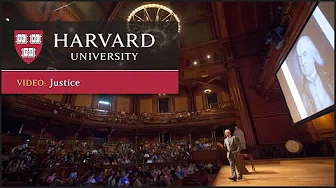
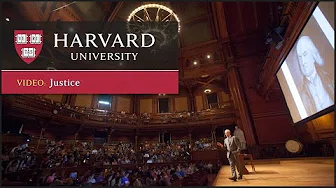
Justice with Michael Sandel
19 videos 1,299,058 views Last updated on Jul 1, 2014


Harvard University

Instructor Michael Sandel JUSTICE is the first Harvard course to be made freely available online and on public television. Nearly a thousand students pack Harvard's historic Sanders Theatre to hear Michael Sandel, "perhaps the most prominent college professor in America," (Washington Post) talk about justice, equality, democracy, and citizenship.


1

54:56


Justice: What's The Right Thing To Do? Episode 01 "THE MORAL SIDE OF MURDER"
Harvard University


2

55:10


Justice: What's The Right Thing To Do? Episode 02: "PUTTING A PRICE TAG ON LIFE"
Harvard University


3

55:08


Justice: What's The Right Thing To Do? Episode 03: "FREE TO CHOOSE"
Harvard University


4

54:59


Justice: What's The Right Thing To Do? Episode 04: "THIS LAND IS MY LAND"
Harvard University


5

55:10


Justice: What's The Right Thing To Do? Episode 05: "HIRED GUNS"
Harvard University


6

55:14


Justice: What's The Right Thing To Do? Episode 06: "MIND YOUR MOTIVE"
Harvard University


7

55:05


Justice: What's The Right Thing To Do? Episode 07: "A LESSON IN LYING"
Harvard University


8

55:07


Justice: What's The Right Thing To Do? Episode 08: "WHATS A FAIR START?"
Harvard University


9

55:01


Justice: What's The Right Thing To Do? Episode 09: "ARGUING AFFIRMATIVE ACTION"
Harvard University


10

55:08


Justice: What's The Right Thing To Do? Episode 10: "THE GOOD CITIZEN"
Harvard University


11

55:11


Justice: What's The Right Thing To Do? Episode 11: "THE CLAIMS OF COMMUNITY"
Harvard University


12

55:11


Justice: What's The Right Thing To Do? Episode 12: "DEBATING SAME-SEX MARRIAGE"
Harvard University


13

7:26


Justice with Michael Sandel - CCCB: Bioethics: Designer children
Harvard University


14

1:15


Justice with Michael Sandel - CCCB: Bioethics: Testing utilitarianism
Harvard University


15

4:16


Justice with Michael Sandel - BBC: Fair pay?
Harvard University


16

6:37


Justice with Michael Sandel - BBC: Justice: Torture and human dignity
Harvard University


17

5:48


Justice with Michael Sandel - BBC: Justice: Collective responsibility
Harvard University


18

4:42


Justice with Michael Sandel - NHK: The Ultimate Choice
Harvard University


19

1:19:19


BBC Radio's The Public Philosopher with Michael Sandel | Institute of Politics
Harvard University